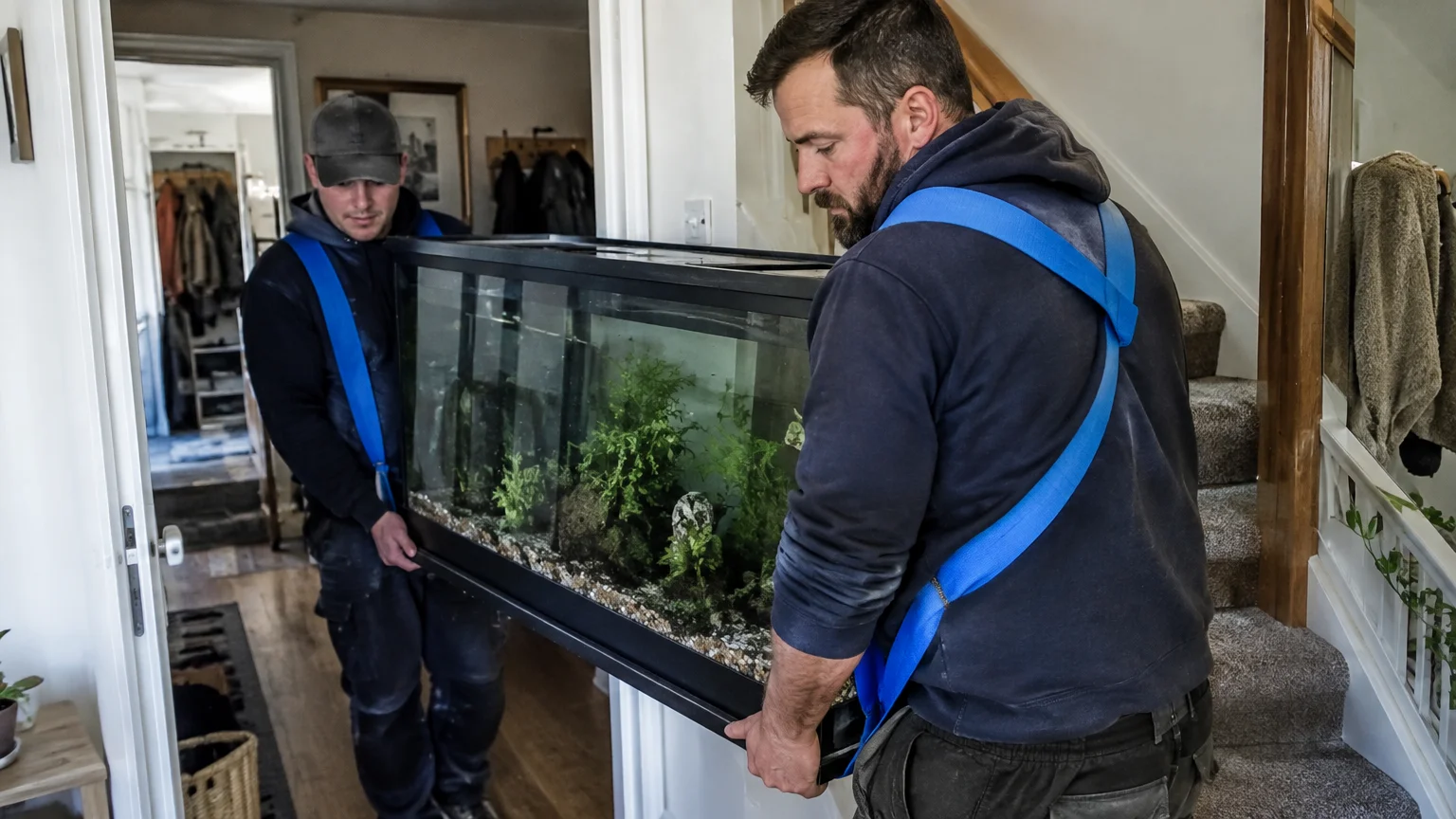
How to move a fish tank safely starts with removing the fish, draining all water, and taking out loose parts. Keep the empty tank level as several people carry it. A careful plan helps protect the glass, seals, stand, fish, plants, and equipment during a move in Charlottesville.
Moving an aquarium can feel stressful. Fish, glass, water, and heavy furniture all need care. A calm plan makes the work safer. Charlottesville Virginia Movers helps homeowners, tenants, and business owners handle tanks that are too large, fragile, or awkward to carry alone.
Table of Contents
- Can you move a fish tank without emptying it?
- What should you do with the fish before moving the tank?
- What supplies do you need to move a fish tank?
- How do you prepare a fish tank for transport?
- How do you lift and carry a fish tank safely?
- How should you transport a fish tank to the new location?
- How do you set up a fish tank after moving?
Can you move a fish tank without emptying it?
No. A fish tank should be fully empty before it moves. Water, gravel, rocks, and decorations add weight. They also shift while people carry the tank. This movement can put stress on the glass and silicone seams.
A filled aquarium is hard to control. Even a small tank may be too heavy for one person. A large tank can become very heavy when filled. The stand may bend, twist, or slide if it moves with the tank on top.
Why a filled aquarium is too heavy and unstable to move
Water can move from side to side during lifting. This shifting weight can pull the tank off balance. Gravel and decorations may strike the glass or scratch the bottom. A filter, heater, or air line may also catch on nearby items.
The safest plan is to remove the fish and drain the water. Take out all gravel and other contents. Carry the empty tank by its bottom frame or base. Never lift an aquarium by its rim, lid, trim, or stand.
How to plan the move around your fish and equipment
Give the fish a quiet, safe place while the aquarium moves. Prepare the new tank location before the move starts. It needs a level floor, a strong stand, and nearby power outlets.
Measure the tank, doors, stairs, and turns. Check for rugs, boxes, wet floors, and other trip risks. In Charlottesville, older homes and apartments may have tight halls or narrow doors. Test the route before anyone lifts the tank.
If the tank is large, custom-built, cracked, or upstairs, professional Furniture Movers may help. Charlottesville Virginia Movers can help residents decide if a do-it-yourself move is safe or if trained moving help is better.
What should you do with the fish before moving the tank?
Catch the fish gently and place them in clean containers with tank water. The containers need secure lids, air space, and protection from heat or cold. Fish should never stay in the aquarium while it is drained, lifted, or carried.
Stop feeding the fish several hours before the move. This can help limit waste in the transport water. For a longer move, the fish may need a larger container, a battery air pump, or advice from an aquarium expert.
How to safely catch and transport aquarium fish
Use a clean fish net and move slowly. Fast chasing can hurt fish or damage their fins. Remove decorations first when possible. Fish are easier to catch in open water.
Place the fish in strong buckets, lidded containers, or fish bags made for aquarium use. Use tank water so the fish do not move straight into water with different conditions. Leave air space at the top. Close each container so it cannot tip or spill.
Keep the containers away from direct sun, vents, heaters, and cold parts of a vehicle. Do not place boxes on top of them. A towel can reduce light and movement, but it must not block air flow.
How to store tank water, plants, and decorations
Save some established tank water in clean, sealed containers. This water may help make the new setup more familiar. It does not replace testing the new water. Old gravel and filter media may also hold helpful bacteria.
Keep live plants in tank water or on damp paper. Wrap decorations on their own so they cannot hit the glass. Never use containers that held soap, bleach, fuel, or other chemicals.
Keep the fish containers stable and shaded at the new location. Avoid long delays before setting up the tank. If the move takes most of the day, the fish may need extra oxygen and close temperature care.
What supplies do you need to move a fish tank?
A safe move needs more than a few blankets. Supplies should protect the glass, hold water, and make lifting easier. Gather everything before draining the aquarium. This keeps the fish in temporary containers for less time.
Useful supplies include:
- Clean buckets or lidded containers for water and fish
- Fish nets, towels, and waterproof labels
- Moving blankets, foam sheets, and strong packing tape
- Cardboard or flat boards for protecting the tank sides
- Plastic bags for filters, cords, gravel, and small parts
- A hand truck or dolly rated for the expected load
- Work gloves with a firm grip and closed-toe shoes
Protective materials for the glass and stand
Moving blankets help prevent scratches and small bumps. Foam sheets add a soft layer around the glass. Cardboard protects the outside from scuffs. It should not press against sharp corners.
The aquarium should not sit directly on a hard vehicle floor. A level, padded surface helps reduce shaking. Move the stand on its own unless the maker clearly allows another method.
Do not put tape directly on painted surfaces, silicone seams, or aquarium glass. Tape may pull away finishes or leave residue. Wrap the tank first. Secure the wrap around the outside material.
Containers and tools for fish, water, and equipment
Use separate containers for fish, water, gravel, and equipment. Label each one clearly. Keep heaters and glass parts wrapped by themselves so they cannot strike other items.
A waterproof marker, measuring tape, flashlight, and cleaning cloth can help. Take photos of cords and hoses before removing them. If the aquarium needs more people to control it, Loading & Unloading Help may be safer than an improvised lift.
How do you prepare a fish tank for transport?
Start by turning off and unplugging every device. Remove the heater, filter, lights, air pump, tubing, lid, and decorations. Drain the water into clean containers. Then remove gravel and other heavy material.
The tank should be empty and dry on the outside before wrapping. Keep small parts together in labeled bags. Take photos before disconnecting equipment. The photos can make setup easier later.
How to drain, clean, and remove aquarium components
Move the fish first. Unplug equipment and let heated parts cool before handling them. Drain water with a clean hose, bucket, or pump. Leave enough water to cover filter media that must stay wet.
Remove gravel with a scoop or cup. Do not pour heavy gravel out in a way that may strike the glass. Wipe away loose dirt with a clean cloth. Avoid soap, strong cleaners, and household chemicals. Residue may harm the fish later.
Inspect the tank while it is empty. Look for chips, cracks, loose trim, or damaged seams. A small defect may get worse during lifting. Do not move an unsafe tank without advice from a qualified aquarium expert.
How to protect filters, heaters, lids, and fragile parts
Wrap heaters and glass tubes in towels or foam. Put them in a firm box with no room to roll. Keep filter media damp in saved tank water. Electrical parts must stay dry.
Remove the lid and lights from the aquarium. Wrap each piece separately. Cover the empty tank with moving blankets. Carry it with two hands on the base, never by its top edge.
Make one final check before lifting. The tank should contain no gravel, water, tools, or loose parts. The route should be clear. Each person should know where to walk and where to set the aquarium down.
How do you lift and carry a fish tank safely?
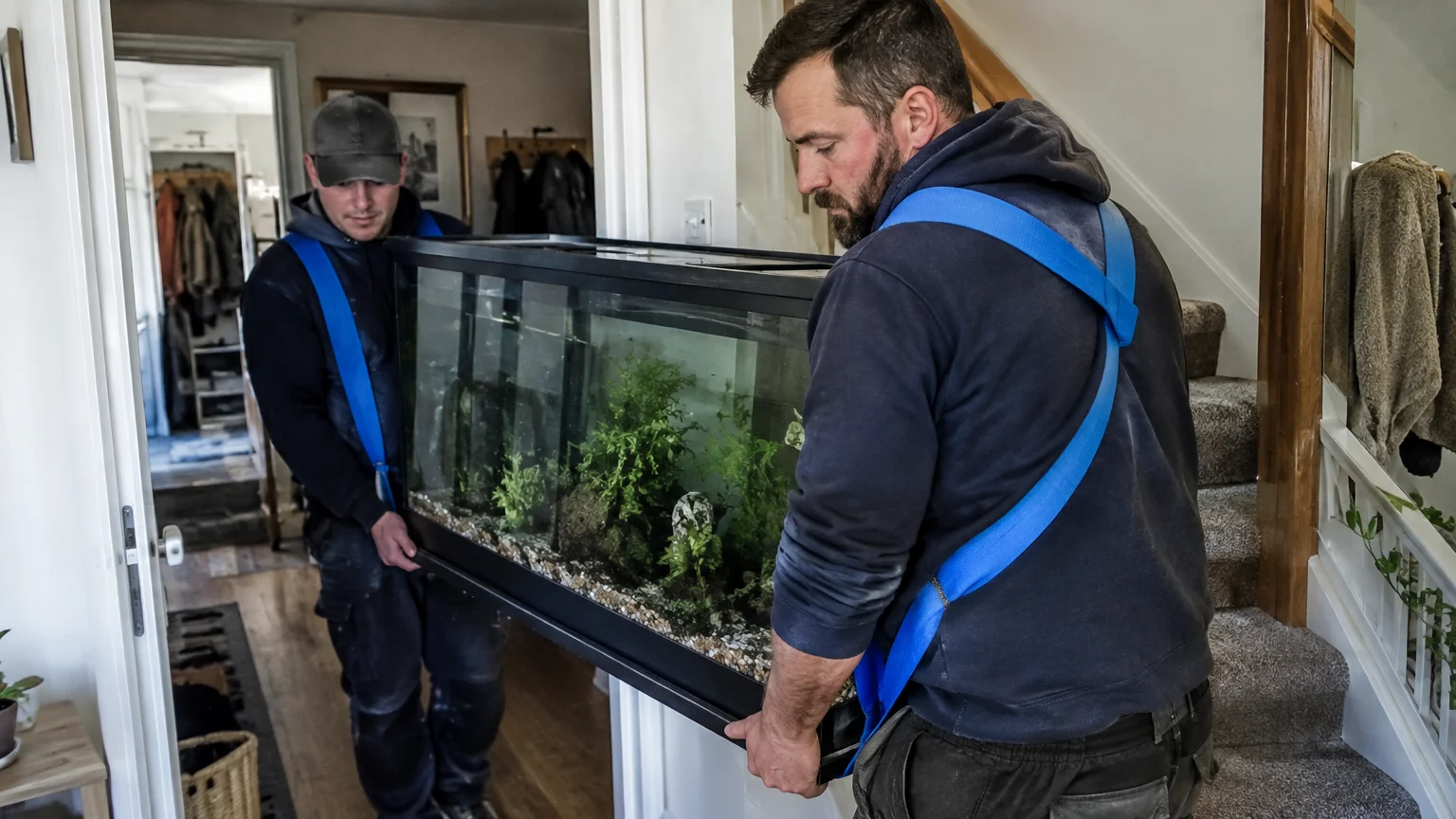
The number of movers depends on the tank size, weight, shape, and route. A small tank may need two strong adults. A larger tank may need four or more trained movers. The group must lift and turn without twisting the tank.
Use clear commands such as “lift,” “walk,” and “stop.” One person should lead and call out changes. Everyone should wear closed-toe shoes and keep both hands free.
How many people should move an aquarium?
Follow the aquarium maker’s guidance first. If no guidance is available, use enough people to keep the tank level and controlled. No one should need to stretch, rush, or change grip during the move.
A dolly may help on flat floors. It must have the right size and weight rating. Strap the tank only around protective padding. Never strap directly against the glass. Do not use a dolly on stairs unless the team and equipment are made for that task.
Never lift a large aquarium alone. Back injuries, crushed fingers, and broken tanks can happen quickly. Professional movers have tools and methods for heavy furniture, fragile glass, stairs, and tight turns.
How to navigate stairs, tight spaces, and narrow doors
Measure the tank and compare it with the narrowest part of the route. Open doors fully when safe. Protect corners, walls, floors, and handrails with moving blankets.
Keep the tank upright unless the maker gives other instructions. Move slowly around turns. Do not tilt the aquarium to force it through a doorway. If it does not fit, stop and choose another route or seek professional help.
Apartment Movers can help with elevators, stairs, and narrow halls. Home and office moves often include awkward items that need a careful plan instead of extra speed.
How should you transport a fish tank to the new location?
The aquarium should travel empty, padded, upright, and firmly secured. Protect the stand from dents and keep it level. Fish, water, gravel, and equipment should ride in separate, stable containers.
A passenger car may work for a small tank. It must stand upright on a protected, level surface without pressure on the glass. Larger tanks often need a suitable moving truck. The tank should never slide freely in a truck bed or ride beside loose furniture.
How to secure the tank and stand in a moving vehicle
Place the tank on a level, padded surface. Keep it away from heavy items that may fall. Use straps around protective padding to stop sliding. Do not tighten straps so much that they press on the glass.
Keep the tank upright unless its instructions say otherwise. Move the stand separately when possible. Secure it so it cannot tip into the aquarium. Check the load after the first short part of the trip. Stop if anything has moved.
Keep fish containers upright and away from extreme temperatures. Do not leave fish in a parked vehicle. During a longer move, check the containers and air supply at planned stops.
What can cause glass, seals, or aquarium equipment to break
Sudden drops, twisting, pressure on one corner, and loose objects are common risks. Heat and cold can also affect fish, water, and some equipment. Check the tank before filling it, even if it looks fine after travel.
Do not stack boxes on the aquarium. Do not place the tank on an uneven surface. Do not drag it across a floor, even when wrapped. These actions can stress the base and seams.
Keep heavy couches, mattresses, and appliances away from the aquarium. Moving heavy furniture alone can also block the path. Move the tank separately after the route is clear.
How do you set up a fish tank after moving?
Put the stand in its final place before bringing over the tank. Check that the floor is firm and the stand is level. Place the empty aquarium on the stand. Inspect the glass, frame, and seams before adding anything.
Add gravel, decorations, equipment, and water in a careful order. Reconnect the filter, heater, light, and air lines. Test each device before returning the fish.
How to check the aquarium before adding water
Look for new chips, cracks, scratches, gaps, or lifted silicone. Check that the stand is stable and the tank sits evenly. Do not fill the aquarium if it rocks or the stand has shifted.
Add water slowly at first and watch the seams. Stop if water appears outside the tank or the glass moves. Once the tank is stable, add treated water and place equipment as the maker directs.
Use saved filter media and gravel when suitable. Test the water before adding fish. The temperature and other conditions must suit the fish species.
When should you return the fish to the tank?
Return fish only after the tank is stable, equipment is running, and water conditions are safe. Floating the transport container may help fish adjust to a temperature change. When suitable for the species, add small amounts of tank water to the container before release.
Do not pour dirty transport water into the aquarium. Watch the fish closely after release. Keep the lights low. Avoid feeding right away if the fish seem stressed.
Key Takeaways
- Empty the aquarium completely before moving it.
- Keep fish in clean, secure containers with suitable tank water.
- Carry the tank from its base, never from the rim or lid.
- Use padding, a level surface, and careful straps during transport.
- Inspect the tank, stand, seams, and water before returning fish.
Conclusion
Learning how to move a fish tank safely means protecting the fish and aquarium at every stage. Empty the tank, wrap the glass, plan the route, and use enough people. These steps can prevent many common problems.
For large aquariums, upstairs moves, narrow doors, or fragile equipment, professional help may be safer. Contact us to discuss moving support from Charlottesville Virginia Movers and nearby communities.
Frequently Asked Questions
Can one person move a small fish tank?
A very small empty tank may be manageable for one person. Two people offer better control, though. The tank should still be lifted from the bottom and kept level. Stairs, tight turns, or a heavy stand call for extra help.
Can fish stay in the aquarium during a short move?
Fish should not stay in the aquarium while it is carried. Even a short move can make water shift and decorations strike the glass. Move the fish into a secure container with suitable tank water. Transport the empty aquarium separately.
Should aquarium gravel be removed before moving?
Yes. Remove gravel before lifting the tank. Gravel adds weight and may slide across the bottom. It can also press against the glass during turns. Store it in a clean container and keep some established material damp when suitable.
How long can fish stay in a transport container?
The safe time depends on the fish species, container size, temperature, oxygen, and travel conditions. A short move still needs careful temperature control and a secure lid. Longer travel may need an air pump or advice from an aquarium expert.
Can a cracked fish tank be moved?
A cracked tank should not be moved as if it were sound. Lifting and shaking can worsen the damage and cause leaks or breakage. Keep people away from sharp edges. Ask a qualified aquarium expert about safe handling and replacement options.
If you are unsure about the tank or the moving route, have someone review it before moving day. Charlottesville Virginia Movers can help you understand the next safe step.
If you are not sure what you are dealing with, it is worth having someone look at it before it turns into a bigger job. Get in touch with Charlottesville Virginia Movers today and we will tell you where you stand.